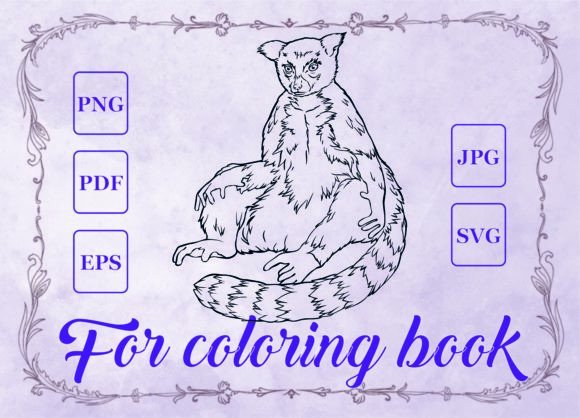
Monkey Animals Coloring Book Graphics & Amp Pages
A Designer's First Look at the Zip File Contents
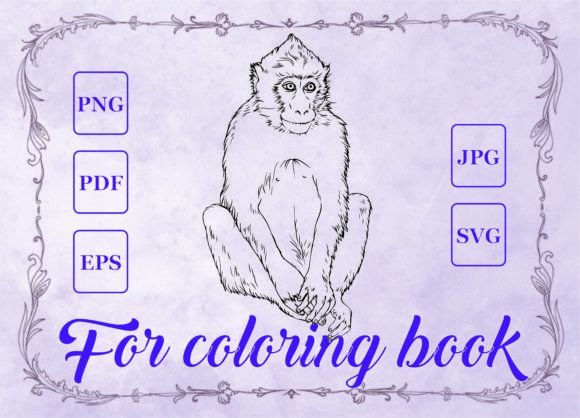
When I first unzipped the Monkey Animals for the Coloring Book package, I was immediately struck by how versatile the file collection actually is. Most designers assume a coloring book asset is just a PDF, but this download delivers far more. Inside the compressed folder, you will find PDF, JPG, PNG, SVG, and EPS formats, which means this is not merely a printable resource. It is a multi-format graphic design asset that can move seamlessly between print projects, digital publishing, and web-based content. The SVG files are particularly valuable because they are true vector graphics, infinitely scalable and ready for sublimation, merchandise design, or any application where clean edges matter. The PNG files arrive with transparency already intact, which saves real production time when you need to layer these illustrations over colored backgrounds, textured surfaces, or branded frames.
From a publishing standpoint, the immediate question is always whether an asset will look polished inside a live content layout. After testing several of the monkey illustrations against a clean blog template, I can confirm the artwork carries a playful, warm, and slightly artistic editorial mood that suits family-friendly websites, educational content hubs, children's activity blogs, and creative lifestyle niches. The linework is crisp, the expressions are charming without feeling cartoonish, and the overall composition leaves room for editorial overlays. This matters more than most publishers realize. An illustration that is too busy will compete with your headline text. One that is too sparse will fail to anchor the page. The Monkey Animals for the Coloring Book graphics strike a balance that feels intentional and ready for professional use.
How This Asset Fits a Real Content Publishing Workflow
Let me walk you through a practical scenario. Imagine you run a blog that publishes weekly activity roundups for parents, educators, or caregivers. You need a featured image for an article about screen-free rainy day ideas. You pull the transparent PNG of a cheerful monkey from this collection, place it on a soft pastel background, add a bold sans-serif title, and export the graphic. In under ten minutes, you have a Pinterest pin that looks custom-illustrated and a blog header that signals warmth and approachability. That same SVG file can be recolored to match your brand palette and used inside a digital guide or a downloadable printable offered as a content upgrade. The EPS file can be handed off to a print vendor for a physical coloring book insert. The PDF provides an instant, print-ready version for your email subscribers. This is the kind of multi-channel flexibility that makes a graphics and coloring pages amp bundle genuinely useful for publishers who need to stretch every asset across multiple platforms.
For affiliate marketers and small business branding efforts, the transparent PNG files are especially practical. You can place the monkey illustrations next to product recommendations, inside sidebar banners, or within newsletter graphics without worrying about white boxes clashing with your email template. The SVG format opens up possibilities for Canva template creation, which is a smart way to build a branded resource library that readers associate with your site. When you invest in a commercial design asset like this, you are essentially buying visual raw material that can be repurposed for blog headers, social media previews, category thumbnails, and even media kits without the recurring cost of custom illustration work.
Editorial Quality and Reader Perception
One aspect of editorial design that separates amateur blogs from trusted publications is the consistency of supporting visuals. When a reader lands on your article and sees a polished, thoughtfully composed graphic, their subconscious assessment of your content quality shifts upward. The Monkey Animals for the Coloring Book illustrations have a hand-drawn charm that reads as intentional and original, which is far more effective than the generic stock imagery that floods search results. I tested the artwork inside a mock blog layout with a serif headline, a clean article grid, and a soft neutral background. The result was cohesive and inviting. The monkey graphic did not distract from the headline. Instead, it reinforced the editorial tone and gave the page a stronger visual identity that would be difficult to achieve with standard stock photography.
For online educators and digital product creators, this kind of illustration can elevate a lead magnet or a worksheet from functional to memorable. A coloring page that features thoughtfully drawn monkey characters will feel more valuable to a subscriber than a hastily assembled activity sheet. The perceived value of your downloadable resources directly impacts conversion rates, list growth, and reader loyalty. When you attach a beautifully designed printable to your newsletter signup, you are not just offering a freebie. You are demonstrating your editorial standards, and readers will carry that impression into every future interaction with your brand.
Where These Graphics Deliver the Strongest Impact
Based on my testing across different content formats, I found the sweet spot for these illustrations lies in hero images, article thumbnails, Pinterest pins, and downloadable resource covers. The artwork scales well for larger hero sections without losing detail, and the SVG format ensures that any resizing for web use remains perfectly sharp. For blog graphics that appear in related post widgets or category archive pages, the monkey illustrations provide better category recognition because they are distinctive enough to stand out among templated visuals. In social media graphics, particularly on platforms like Pinterest where vertical pins dominate, the playful composition of the monkeys can stop a scroll and encourage a click. The emotional pull of animal illustrations, especially ones with expressive faces, should not be underestimated in a content marketing strategy that relies on visual hierarchy to guide user behavior.
For newsletter headers and digital ads, the transparent PNG format allows for quick compositing. You can place a monkey illustration beside your call-to-action, add a subtle drop shadow, and instantly create a professional-looking content page or email banner that feels cohesive with your site design. The EPS and SVG files also make it possible to adapt the artwork for printable design projects like physical coloring books, activity placemats, or event materials, which is a significant advantage if your brand extends into offline touchpoints.
When to Use These Illustrations Carefully
No design asset is universally appropriate, and I want to be candid about the contexts where the Monkey Animals for the Coloring Book graphics might need more thoughtful application. On small mobile thumbnails, the detail in the linework can compress and lose some of its charm. I recommend testing a simplified version of the artwork for very small display sizes, perhaps by cropping to a single monkey face rather than the full illustration. For text-heavy blog images, where the graphic competes with multiple layers of overlay text, the playful nature of the monkeys can create visual friction if your headline is serious or technical. In corporate content or serious professional niches, these illustrations will feel out of place unless your brand voice is intentionally whimsical. The same applies to websites that need a very minimal visual system. If your design language relies on stark whitespace and geometric precision, a hand-drawn monkey will disrupt that rhythm rather than enhance it.
I also suggest checking the contrast of the transparent PNG files against low-contrast backgrounds. The linework is bold enough to hold its own on most light surfaces, but on muted tones or busy patterns, the illustration can lose definition. A quick test inside your actual blog layout, with your real headline font and background color, will tell you everything you need to know before publishing.
Practical Publisher Notes From a Designer's Desk
Before you commit any digital download to a live site, there are a few technical checks that will save you from publishing headaches later. I ran through these with the Monkey Animals for the Coloring Book files, and here is what I recommend.
First, test the artwork on both desktop and mobile screens. An illustration that looks charming at full width can become illegible at 320 pixels wide. Resize the PNG and check the thumbnail version inside your CMS preview. If the monkey's expression is still readable at small scale, you are in good shape. Second, preview the graphic inside a real blog layout with your actual headline text placed over or beside it. The relationship between the illustration and your typography determines whether the final composition feels designed or merely assembled. I tested the monkey artwork with a serif font, a sans serif font, a script font, a handwritten font, and a display font. The illustrations paired best with clean sans-serif headlines and friendly handwritten accents, but the SVG format gives you the freedom to adjust the illustration's weight and color to suit your chosen typeface.
Third, check how the graphic looks in black and white. If your site ever prints content, or if you offer a print-friendly version of your articles, the linework needs to hold up without color. The monkey illustrations performed well in grayscale because the line quality is strong and the compositions are not reliant on color for meaning. Fourth, review file size for web performance. The PNG and JPG files should be compressed appropriately before upload. A bloated image file will slow your page load speed, which hurts both user experience and search rankings. Use a compression tool, keep an eye on your Core Web Vitals, and serve the SVG where possible because vector files are inherently lightweight.
Finally, confirm commercial licensing before using these graphics on monetized websites, affiliate pages, or paid content products. Most creative marketplace assets come with clear terms, and you need to know whether your intended use falls within the allowed scope. If you plan to incorporate the illustrations into a digital product for sale, or use them as part of a lead magnet that drives revenue indirectly, licensing clarity is non-negotiable.
Why This Bundle Supports Stronger Content Performance
When I evaluate a graphic design asset for publishing use, I ask one core question: will this make the content perform better? With the Monkey Animals for the Coloring Book collection, the answer leans strongly toward yes, provided the asset is used in the right context. The illustrations contribute to a clearer visual hierarchy by giving the page a focal point that draws the eye naturally toward the headline. They support more consistent branding because the hand-drawn style can become a recognizable thread across your blog graphics, social media templates, and email visuals. They improve reader trust by signaling that someone invested time and care into the visual presentation of the content. And they offer better click-through potential on platforms like Pinterest, where original, warm, and character-driven imagery consistently outperforms generic stock photography.
For content creators and digital marketers who manage multiple content channels, the multi-format nature of this bundle is a practical advantage. The SVG files can be edited in vector software, recolored, and adapted for sublimation projects or creative design work that extends beyond the screen. The PDF provides an instant, print-ready version. The PNG offers transparency for layered compositions. The JPG gives you a quick, lightweight option for fast uploads. And the EPS ensures compatibility with professional print workflows. This kind of format flexibility is exactly what blog designers and digital publishers should look for when building a design assets library that needs to serve both immediate needs and long-term creative projects.
Building a Visual System Around a Coloring Book Asset
One publishing strategy that I have seen work effectively is to build an entire visual identity around a single illustration collection. With the Monkey Animals for the Coloring Book graphics, you could create a series of category visuals for a parenting blog, a set of Pinterest pins for an educational site, a digital guide cover for a newsletter lead magnet, and social media graphics for an affiliate marketing campaign, all using variations of the same monkey illustrations. The consistency this creates across your content ecosystem is far more valuable than a scattered collection of unrelated visuals. Readers begin to recognize your style. Your brand identity strengthens. And your content starts to feel like a cohesive publication rather than a loose collection of posts.
The Coloring Pages Amp category as a whole is an underutilized resource among serious publishers, largely because it is associated with children's activities rather than editorial design. But the smartest blog designers know that the right graphics can transcend their category. A well-drawn monkey illustration can anchor a blog hero section, add personality to a newsletter, or become the visual signature of a content brand, all while remaining genuinely useful as a printable activity for your audience. That dual purpose, decorative and functional, is what makes this asset worth a closer look for anyone publishing content that needs to feel polished, clickable, and human.