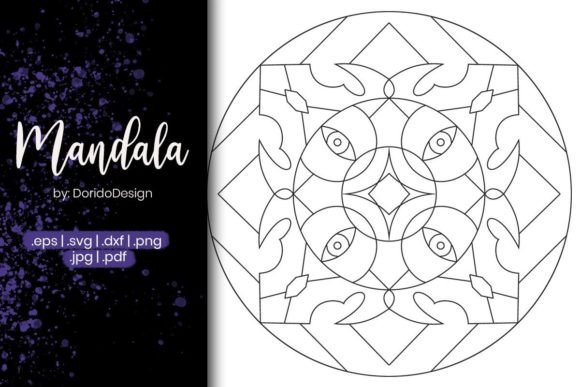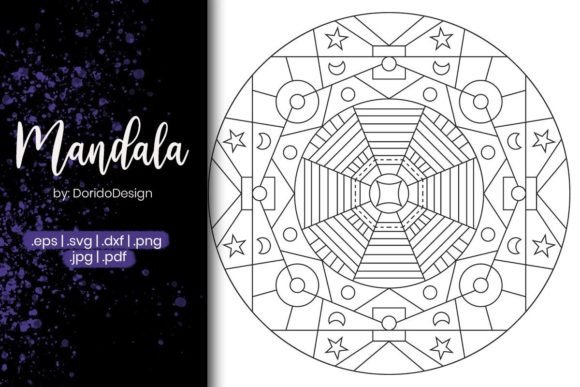
Geometric Mandala Coloring Page Vol.19
A Designer’s First Look: Clean, Calm, and Craft-Ready
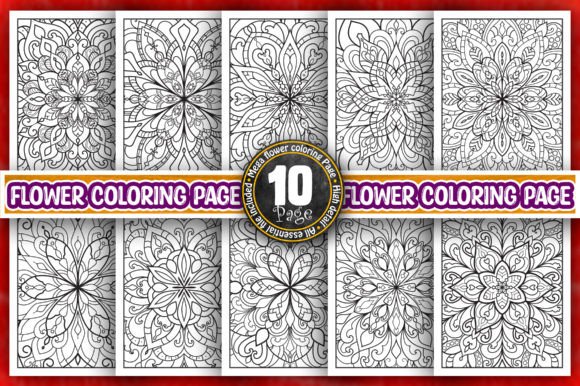
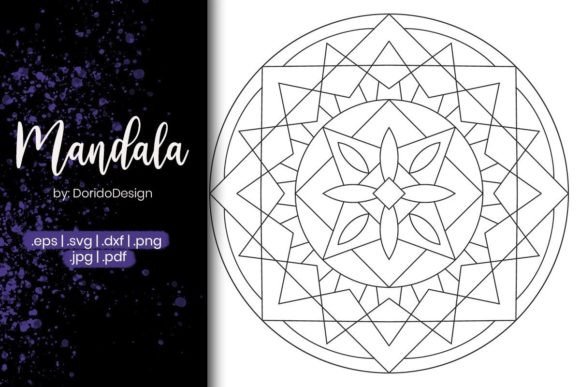
When I opened Geometric Mandala Coloring Page Vol.19, my eye went straight to the balance—tight symmetry without rigidity, layered circles with breathing room between lines, and a subtle rhythm that feels meditative but never static. As an embroidery designer who’s stitched hundreds of mandalas for baby onesies, boutique tea towels, and custom wedding patches, I appreciate how this one avoids overcomplication. It’s not a dense fill-stitch labyrinth; it’s a confident outline-based structure with intentional negative space—exactly what makes a coloring page translate well into clean machine embroidery.
Real Project Test: Stitching It on a Linen Tote Bag
Last week, I prepped Geometric Mandala Coloring Page Vol.19 for a client’s small-batch linen tote collection—think minimalist branding for a local herbal apothecary. I resized it to 4.2 inches wide, centered it on the front pocket, and ran a test on scrap linen with medium tear-away stabilizer. The result? Crisp satin-stitched outer rings held beautifully, inner geometric motifs stayed legible at that scale, and the open center left room for optional hand-embroidered initials later. Customers responded strongly—not just to the pattern, but to how “handmade” it felt without looking fussy or fragile.
Where This Design Shines (and Where It Needs Thought)
Geometric Mandala Coloring Page Vol.19 works exceptionally well for:
- Custom apparel—especially on structured, low-stretch fabrics like cotton twill sweatshirts or denim jackets where stitch definition stays sharp;
- Baby embroidery—its smooth curves and lack of micro-detail make it ideal for soft cotton onesies and burp cloths (just avoid dense fill areas near seams);
- Embroidered patch production—the bold outer frame anchors the design, while interior geometry reads clearly even at 2.5–3 inches;
- Holiday and wedding gifts—it reads as intentional, serene, and timeless on pillow covers, kitchen towels, or guestbook sleeves;
- Digital product sellers—as a Graphics asset in the Coloring Pages Amp category, it bridges coloring enthusiasts and crafters who convert line art into stitchable files.
Careful Use Cases: Know Before You Hoop
This isn’t a “set and forget” embroidery file. Because it originates as a coloring page—not a purpose-built machine embroidery design—it demands thoughtful adaptation:
- Hoop size matters: Don’t force it into a 3-inch hoop if key geometry gets cropped. Measure the widest repeating element first.
- Fabric texture changes everything: On terry cloth towels or nubby bouclé, fine interior lines may blur—consider simplifying or converting them to running stitch outlines.
- Dark fabric needs contrast checks: That delicate inner star motif disappears on navy unless you use bright white or metallic thread. Always preview in black-and-white mockups.
- Curved surfaces (caps, hats) require repositioning: The circular symmetry helps—but test placement on a cap blank before committing. Avoid stitching directly over seams or brims.
- Wash durability hinges on stitch density: If converting to fill stitch, keep density under 12 stitches/mm to prevent stiffness and cracking on baby items or frequent-wash kitchen linens.
What It Adds to Your Handmade Product—and What It Doesn’t
Geometric Mandala Coloring Page Vol.19 elevates perceived value without demanding advanced technique. It reads as intentional, mindful, and quietly sophisticated—ideal for brands leaning into slow craft, wellness, or modern heirloom aesthetics. Buyers notice the spacing, the rhythm, the absence of visual noise. That builds trust: they sense care was taken, not just speed.
But it won’t mask poor stabilization or mismatched thread weight. And it won’t carry your brand alone—it needs smart pairing: a clean font for a monogram, a muted thread palette, or subtle fabric dye to match its calm tone. Used well, it supports professionalism. Used hastily, it looks like a last-minute clipart add-on.
Practical Notes from the Embroidery Bench
Before cutting fabric or listing on Etsy:
- Always stitch a test—on the exact fabric + stabilizer combo you’ll use;
- Review thread color contrast on both light and dark backgrounds—not just your monitor;
- Inspect small corners and intersections: Does the inner hexagon hold shape at 2.8 inches? Or does it collapse into a blob?
- Confirm licensing: Since this is listed as a Graphics asset usable for greeting cards and invitations, double-check whether commercial embroidery rights are included before selling finished embroidered products;
- Use printable mockups to show customers how it scales across tote bags, sweatshirts, and patches—this boosts conversion and reduces returns;
- Pair with complementary design assets: A simple border or corner motif from the same volume can unify a collection without overwhelming the core mandala.
Final Thought: A Quiet Workhorse, Not a Showstopper
Geometric Mandala Coloring Page Vol.19 won’t shout. It doesn’t need to. In a market flooded with busy, trend-chasing patterns, its quiet confidence is its strength. It serves the maker who values clarity over clutter, intention over impulse, and longevity over novelty. Whether you’re stitching it onto a baby’s organic cotton blanket or using it as a refined anchor for your next Etsy digital embroidery bundle, it holds space—gracefully, reliably, and with real project-ready intelligence.