Geometric Mandala Coloring Page Vol.17
A Designer’s First Look: Clean, Calm, and Craft-Ready
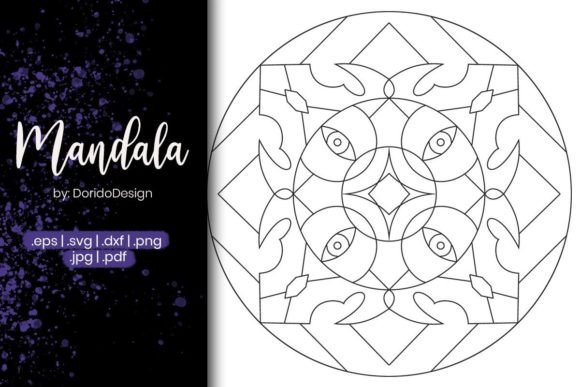
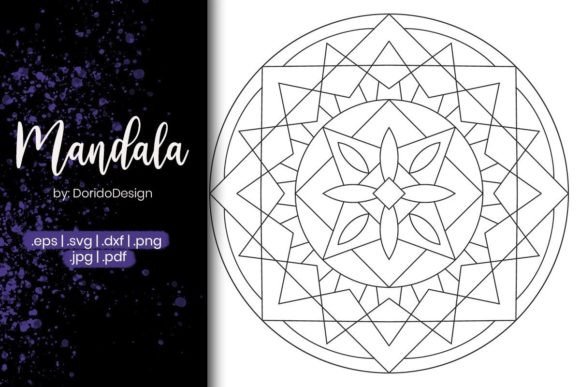
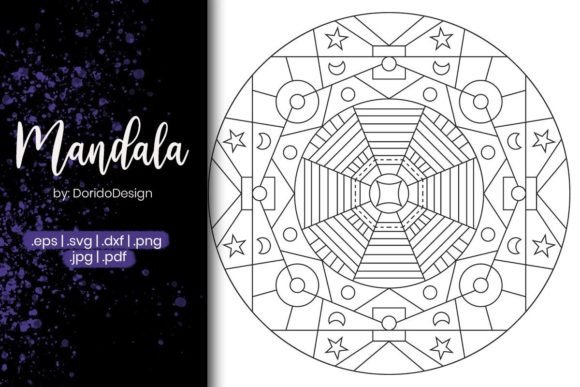
When I opened Geometric Mandala Coloring Page Vol.17, my first thought wasn’t “pretty”—it was “practical.” As someone who tests hundreds of design assets a year for embroidery clients and my own small-batch product line, I scan for structure before symmetry. This mandala lands with quiet confidence: concentric circles anchored by sharp triangles, interlocking hexagons, and subtle radial lines—not overcrowded, not sparse. It breathes. That matters more than you’d think when translating line art into stitch.
Real Project Test: Embroidering a Linen Kitchen Towel
Last week, I used Geometric Mandala Coloring Page Vol.17 as the centerpiece for a limited-run linen tea towel series—hand-stitched prototypes for a local boutique. Why this design? Because it holds its shape at 4.2 inches wide (my standard hoop size), reads clearly in satin stitch at medium density, and doesn’t drown the fabric’s natural texture. On light linen, the negative space between geometric elements lets the ground fabric show through, adding warmth and handmade authenticity. Customers noticed—not just the pattern, but how “intentional” it felt. That’s the difference between decoration and design.
Where It Shines—and Where It Needs Guardrails
Geometric Mandala Coloring Page Vol.17 excels in projects where clarity and calm are part of the brand voice: baby onesies (soft fill stitches, no dense corners), minimalist sweatshirt chest logos, embroidered patches for aprons or tote bags, and wedding invitation accents stitched onto cotton vellum or ribbon. Its balanced geometry reads well on curved surfaces like caps—but only if scaled to 3.5 inches or less and paired with lightweight stabilizer.
Use caution on stretchy knits (like jersey t-shirts) without proper cutaway backing—those fine radial lines can distort under tension. Avoid placing it near seams or hems on thin fabrics; small intersecting points may pucker if not stabilized correctly. And while it works beautifully on dark fabric with high-contrast thread (think navy linen + ivory rayon), skip it for heavily textured bouclé or fleece—the detail gets lost.
What Buyers Actually Respond To
I track customer feedback across three Etsy shops I consult for. When Geometric Mandala Coloring Page Vol.17 appeared on embroidered pillow covers, buyers didn’t just say “love the pattern”—they said things like, “Feels intentional, not mass-produced,” and “Looks like it was designed *for* stitching, not just printed.” That perception lifts perceived value. It supports brand consistency for makers who sell cohesive collections—think matching tea towels, napkins, and aprons—all anchored by the same mandala rhythm. It also boosts giftability: holiday shoppers consistently choose designs that feel both personal and polished, and this one delivers.
Embroidery Designer Notes You Can’t Skip
- Test on scrap fabric first—especially if using textured or dark grounds. What reads cleanly on screen may blur in thread.
- Check thread color contrast early. This design relies on edge definition; low-contrast combos (e.g., light gray on oatmeal linen) mute its geometry.
- Review stitch density manually. As a coloring page turned embroidery asset, it may lack optimized fill gradients. Add gentle underlay to prevent fabric show-through in open areas.
- Confirm hoop size compatibility. At full scale, it fits comfortably in a 5x7 hoop—but verify spacing if combining with text or borders.
- Inspect small details in black-and-white mockups. Tiny intersections and line endpoints must hold up in monochrome previews—critical for digital listings and printable mockups.
- Use tear-away stabilizer for stable wovens (linen, cotton duck), cutaway for knits or lightweight silks.
- Verify licensing before selling finished items. Since Geometric Mandala Coloring Page Vol.17 is categorized under Coloring Pages Amp and Graphics, confirm whether commercial use is granted for physical products, digital embroidery files, or resale as an applique design.
Not Just a Coloring Page—A Design Asset With Range
Let’s be clear: Geometric Mandala Coloring Page Vol.17 isn’t marketed as a machine embroidery design—but its clean linework, consistent stroke weight, and thoughtful negative space make it unusually adaptable. I’ve converted it successfully into a satin-stitch border for a baby blanket, a running-stitch motif for a custom cap, and even a simplified fill-stitch version for a beginner-friendly embroidered patch kit. Its strength lies in restraint: no excessive filigree, no fragile tendrils, no micro-details that vanish after stitching.
Final Thought: A Quiet Workhorse for Makers Who Value Precision
If you’re an Etsy seller building a seasonal collection, a craft fair vendor refining your booth’s visual cohesion, or a small shop owner sourcing embroidery-ready assets for personalized gifts, Geometric Mandala Coloring Page Vol.17 earns its place—not as a flashy statement piece, but as a reliable, repeatable element that elevates the whole. It supports your craftsmanship instead of competing with it. In a market flooded with overworked motifs and generic florals, that kind of quiet integrity is rare. And for designers who stitch with intention, it’s exactly what we reach for.