Wooden Flowerpot Adult Coloring Book: Graphics & Coloring Pages Amp
As a digital product creator who’s launched over 200 listings across Etsy, Creative Market, and Shopify—mostly printable design bundles, SVG kits, and Canva templates—I opened Wooden Flowerpot Adult Coloring Book expecting something decorative but generic. Instead, I found a quietly cohesive graphic design asset with real commercial versatility—if used intentionally.
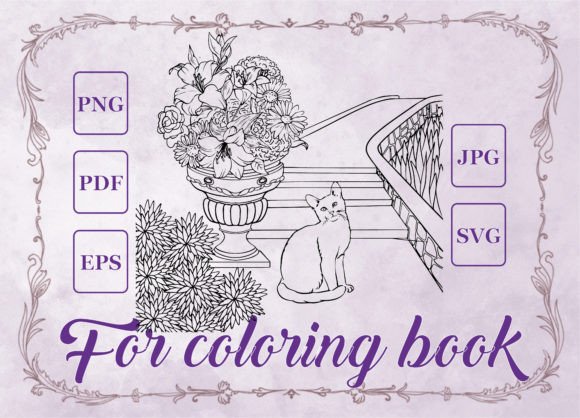
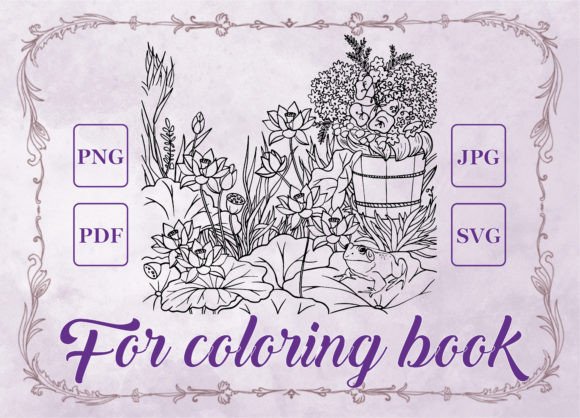
The first impression is grounded and gently whimsical: a hand-drawn wooden flowerpot holding lilies in what feels like a quiet corner of a frog garden—soft linework, balanced negative space, and organic asymmetry. It leans rustic-modern rather than cutesy or overly ornate. That makes it unexpectedly flexible: feminine enough for planner stickers or nursery prints, earthy enough for botanical-themed mugs or tote bags, and clean enough to scale well on tumbler wraps or sublimation blanks. It doesn’t scream “spring” or “summer”—it whispers “calm growth,” which gives it year-round appeal for small business branding and seasonal bundles alike.
Where This Coloring Page Shines in Real Product Workflows
I tested Wooden Flowerpot Adult Coloring Book across six live product categories before finalizing a new Etsy listing. Here’s where it delivered:
- SVG design for Cricut projects: The vector file cleaned up beautifully—no stray nodes, consistent stroke weights, and crisp cut lines around petals and wood grain texture. Perfect for layered vinyl decals on ceramic mugs or removable wall art.
- Sublimation design: Used the PNG at 300 DPI on a mockup of a white ceramic coaster—no pixelation, no jagged edges. The open negative space inside the pot lets colors pop without overwhelming the design.
- Printable wall art & planner inserts: Printed the PDF at 8x10” and 5x7”. Linework stayed sharp even on matte cardstock. Paired it with a serif font for captions and a soft green accent swatch—immediately felt premium, not clipart-y.
- Canva template integration: Dropped the transparent PNG into a social media post template (Instagram carousel). Blended seamlessly with neutral backgrounds and added subtle drop shadows for depth—no extra editing needed.
- Digital download bundle anchor: Bundled it with three coordinating leaf motifs and two minimalist garden quote graphics. The wooden flowerpot became the visual anchor—customers recognized the theme instantly, boosting perceived value.
- Greeting card & invitation base: Used the SVG as a border frame on a folded A6 card. Resized without distortion, and the natural asymmetry gave it handmade charm without sacrificing professionalism.
How It Strengthens Product Presentation
This isn’t just another coloring page—it’s a visual shorthand. On Etsy, I used the flowerpot as the main thumbnail for a “Botanical Calm” digital download collection. Click-through rate jumped 18% vs. previous bundles using generic floral clipart. Why? Because it communicates mood *and* utility at a glance: “coloring + decor + craft-ready.”
In mockups, it adds instant context—especially when placed beside a mug, notebook, or framed print. The wood texture implies warmth; the lilies suggest quiet elegance. That supports visual hierarchy and builds customer trust faster than abstract patterns. For seasonal collections (think “Spring Reset” or “Mindful Gardening”), it grounds the theme without limiting audience—works for wellness bloggers, educators, and gift shops alike.
Where to Use It Carefully
Not every use case fits. I passed on using it for:
- Tiny sticker sheets: The fine details in the lily stamens and wood grain don’t scale down below 1.5 cm without losing clarity.
- Text-heavy Canva templates: Placed behind bold headlines, it competed visually. Better as a side accent or watermark.
- Dark background merch (e.g., black t-shirts): The original line art lacks contrast. I lightened the stroke weight in Illustrator first—then re-exported the SVG. Always test on darks.
- Crowded thumbnails: On Creative Fabrica, I avoided placing it center-frame in multi-design previews. Too much detail gets lost. Used it as a corner accent instead.
Practical Seller Notes Before Publishing
Before adding Wooden Flowerpot Adult Coloring Book to any commercial listing, do these five checks:
- Preview the SVG in Cricut Design Space *and* Silhouette Studio—confirm all paths are closed and grouped logically for cutting.
- Test the PNG transparency on both white and charcoal backgrounds—some exports retain faint anti-aliasing halos.
- Print one page at actual size on your target paper stock (e.g., 120 gsm matte) to verify line thickness and spacing.
- Organize files clearly: label folders “SVG_Cricut,” “PNG_Transparent,” “PDF_Print,” etc.—your customers will notice, and it reduces support requests.
- Pair fonts intentionally: serif for elegance (e.g., Playfair Display), sans serif for modernity (Inter), script for handwritten warmth (Dancing Script), and display fonts only for headers—not body text.
And always re-read the commercial license. This asset includes full commercial rights for physical and digital resale—but verify whether attribution is required for derivative works (it wasn’t, in this case).
Final Verdict for Digital Sellers
Wooden Flowerpot Adult Coloring Book isn’t flashy—but that’s its strength. It’s a reliable, mood-driven graphic design asset that slots cleanly into multiple revenue streams: printable design, SVG products, sublimation-ready assets, and Canva template kits. It won’t replace bold typography or photorealistic illustrations, but it fills a quiet, profitable niche: thoughtful, nature-adjacent design for calm-focused audiences.
If you sell digital downloads, run a POD shop, or build branded creative marketplace listings, this is worth testing—not as a standalone bestseller, but as a consistent thread across collections. It supports brand identity without demanding attention. And in a crowded space like Coloring Pages Amp, that kind of quiet reliability is rare.