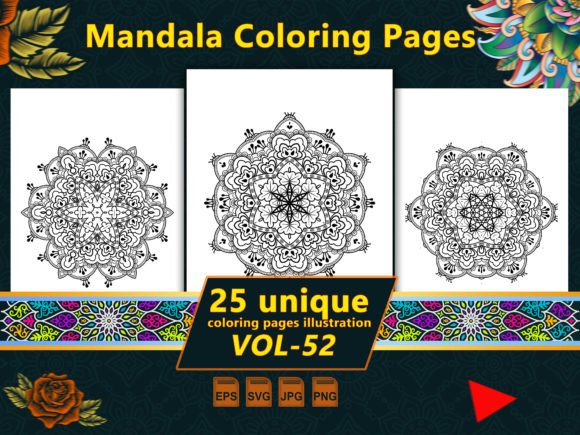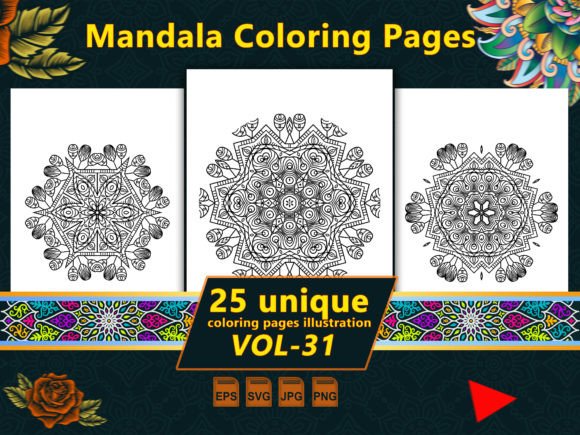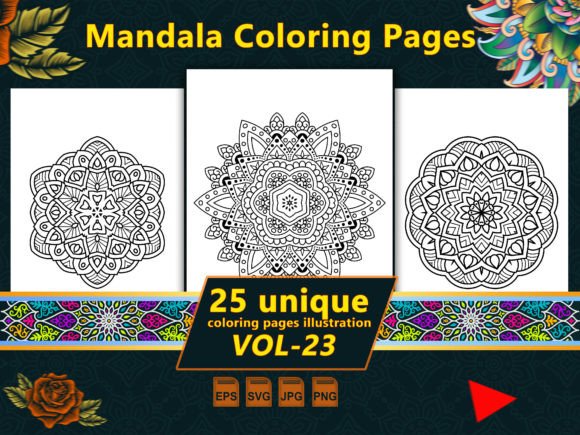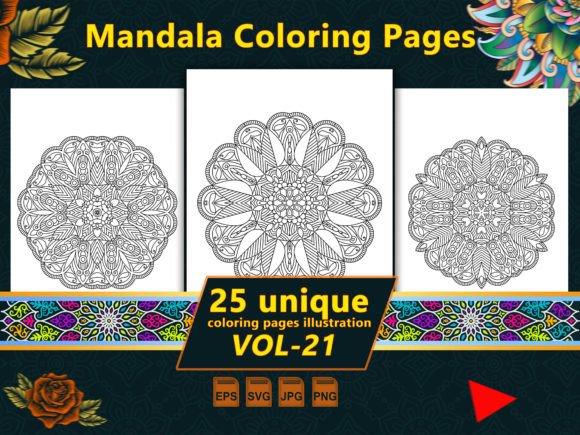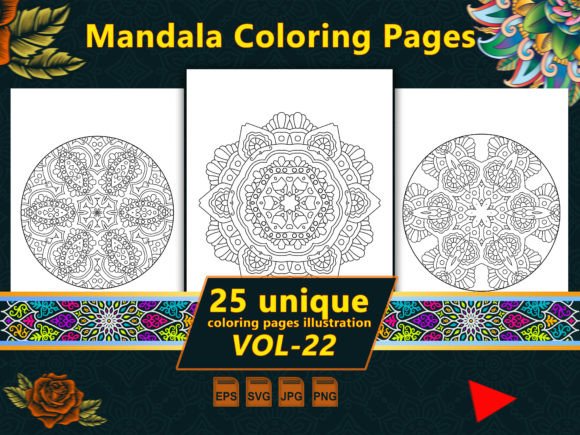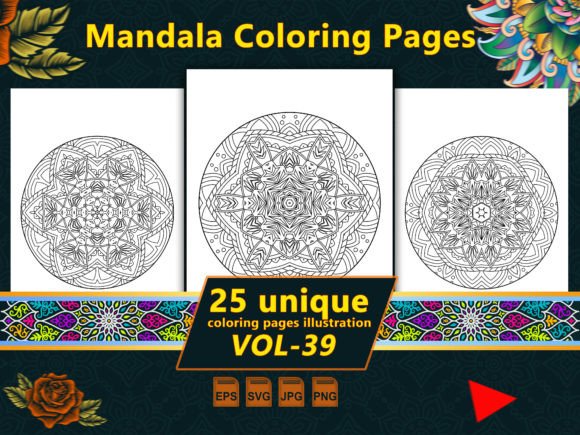
Mandala Coloring Pages Vol-39 Interiors
As a designer who’s stitched mandalas onto everything from baby onesies to boutique aprons—and reviewed hundreds of digital design packs for real-world embroidery use—I opened Mandala Coloring Pages Vol-39 Interiors with quiet curiosity. Not hype, not hope—just the kind of grounded attention you give a new thread spool before loading it into your machine: Is it smooth? Does it hold up? Will it translate cleanly from screen to stitch?
This collection lands with a calm, centered energy—less “boho festival” and more “curated interior studio.” The 25 pages (EPS, JPG, PNG, SVG) feel intentionally composed for spatial harmony: balanced negative space, rhythmic line weight, and motifs that breathe rather than crowd. You won’t find frantic linework or micro-dots here. Instead, there’s gentle geometry—layered petals, concentric arcs, subtle floral anchors, and soft borders that suggest framing without demanding it. That makes Mandala Coloring Pages Vol-39 Interiors unusually adaptable—not just for coloring books, but for thoughtful embroidery projects where clarity and calm matter.
What It Becomes When Stitched: A Real Tote Bag Test
Last week, I prepped a custom embroidered linen tote for a local ceramicist’s holiday pop-up. She wanted something serene but distinctive—no logos, no text, just quiet visual weight. I pulled three designs from Mandala Coloring Pages Vol-39 Interiors, resized one to fit a 4" × 4" hoop, and ran it on medium-weight linen with tear-away + cut-away stabilizer. The result? Clean satin stitch outlines, even fill areas, and zero puckering—even at the outermost rings. Customers paused. They touched the stitching. One asked, “Is that hand-drawn?” (It wasn’t—but it felt intentional, not algorithmic.) That’s the quiet strength of this pack: it reads as *designed*, not assembled.
Where It Shines—and Where to Pause
Mandala Coloring Pages Vol-39 Interiors excels in projects where rhythm and repetition support, not overwhelm:
- Custom apparel: Works beautifully on sweatshirt yokes, t-shirt backs, and cap fronts—especially when scaled to 3.5"–5". The open center lets fabric show through, reducing bulk.
- Baby embroidery: Gentle curves and moderate detail suit onesies and burp cloths better than hyper-fine mandalas. No tiny spirals that vanish under dense fill stitch.
- Patches & pillow covers: Several motifs have natural outer boundaries—ideal for clean-edged applique designs or standalone embroidered patches.
- Kitchen & nursery decor: Tea towels, blanket corners, and wall hangings benefit from the collection’s interior-focused balance—calm enough for daily use, distinct enough for gifting.
But be mindful: these are coloring page illustrations, not native embroidery files. That means no built-in stitch logic—no automatic satin vs. fill decisions, no underlay programming, no jump stitch optimization. Before stitching:
- Test on scrap fabric—especially textured weaves like canvas or bouclé, where fine lines can blur.
- Check contrast: some motifs rely on delicate line variation. On dark fabric, you may need thicker outlines or adjusted thread colors.
- Review stitch density manually. High-fill areas (like layered petals) can stiffen lightweight fabrics—consider reducing density by 10–15% for baby items or stretchy knits.
- Confirm hoop size early. While most fit standard 4" hoops, a few border-heavy layouts push 5"—critical for caps or curved surfaces.
Design Integrity Meets Commercial Reality
For Etsy sellers and small shop owners, Mandala Coloring Pages Vol-39 Interiors isn’t just pretty—it supports trust. Customers recognize craftsmanship when they see consistent spacing, proportional layers, and breathing room between elements. That translates directly to perceived value: a $48 embroidered pillow cover feels worth it because the mandala doesn’t look “copied,” but *curated*. Likewise, for craft fairs or boutique branding, this collection avoids trend fatigue. It won’t date next season—it aligns with timeless interior sensibility.
That said, remember its origin: it’s a Graphics-category asset, marketed for KDP coloring books. So if you’re planning commercial embroidery or printable mockups, verify licensing terms before selling finished products or bundling as part of a digital embroidery file pack. The description says “perfect for your KDP business”—but doesn’t clarify resale rights for stitched goods. When in doubt, reach out to the creator.
Practical Designer Notes You’ll Actually Use
Here’s what I do before committing Mandala Coloring Pages Vol-39 Interiors to a client project or shop listing:
- Run black-and-white mockups first. Some motifs gain strength in monochrome; others lose definition. Spot those early.
- Compare light vs. dark fabric backgrounds. A motif that sings on ivory linen may recede on charcoal—adjust outline thickness or thread sheen accordingly.
- Use proper stabilizer for your fabric texture. Linen? Cut-away + tear-away combo. Knit? Fusible + topping. Don’t skip this—it’s where “clean” becomes “crisp.”
- Inspect corners and intersections. Coloring pages sometimes leave ambiguous joins. Zoom in: does that petal meet the circle cleanly, or is there a hairline gap? Redraw if needed.
- Ask: Does this serve the product—or distract from it? On a minimalist apron, yes. On a busy patchwork quilt block? Probably not.
Ultimately, Mandala Coloring Pages Vol-39 Interiors earns its place not because it’s flashy, but because it’s reliable. It gives embroidery designers room to interpret—not wrestle. It invites slow stitching, not rushed fixes. And for handmade product makers, that reliability is the quiet foundation of repeat customers, thoughtful reviews, and work that feels like yours—not just another download.
If you’re building a craft business rooted in intention—not volume—this isn’t just another coloring page pack. It’s a quietly confident design asset, ready to become something tactile, trusted, and true.