Mandala Coloring Pages Vol. 2
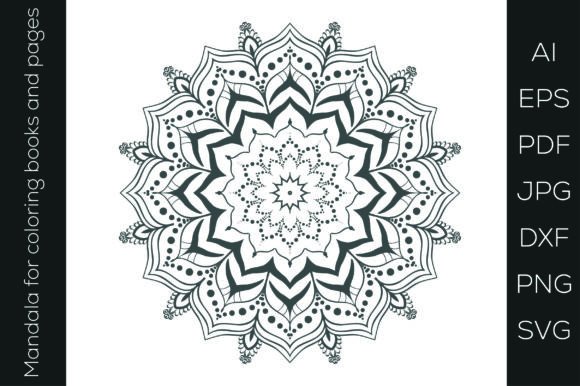
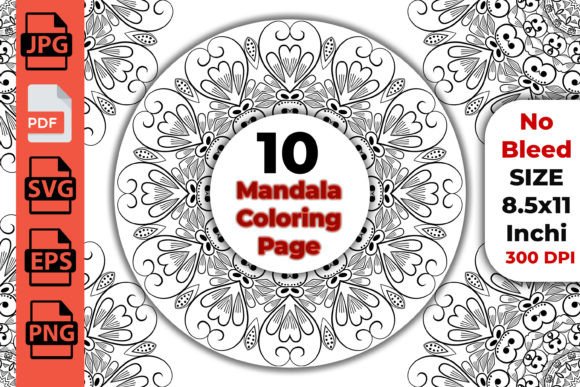
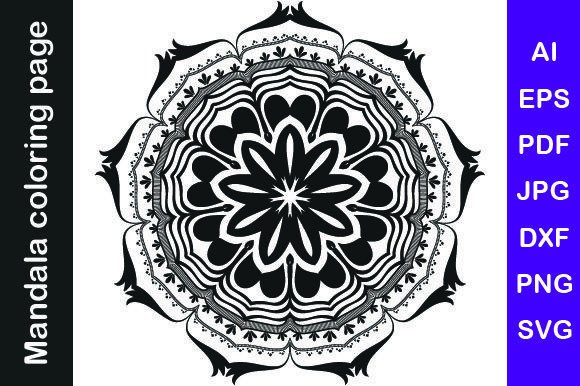
As a designer who’s stitched hundreds of mandalas—from delicate baby onesies to bold tote bags for boutique clients—I opened Mandala Coloring Pages Vol. 2 expecting elegance, symmetry, and embroidery-ready clarity. What I found was a clean, centered, line-art mandala with balanced radial layers, moderate intricacy, and breathing room between elements—exactly the kind of design that translates well from coloring page to machine embroidery design, if you approach it with intention.
First Impressions: Calm, Crafted, Commercially Flexible
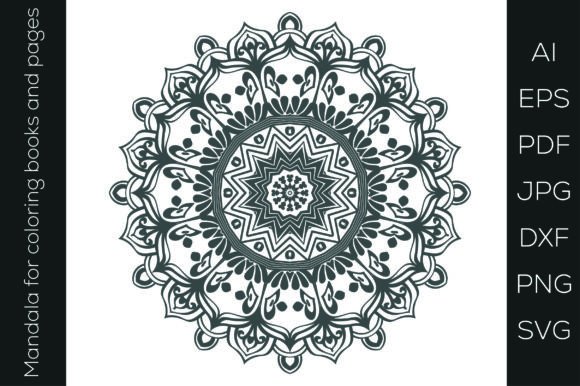
This isn’t a hyper-detailed zentangle or an ultra-minimalist dot mandala—it sits comfortably in the middle ground. The outer ring has subtle petal-like flourishes; the inner core features concentric circles and gentle geometric repeats. There are no tiny disconnected dots, no hair-thin connectors, no overlapping outlines that’ll vanish under thread. That matters. A lot. When I held it up against a lightbox and imagined it as a satin-stitched center on a linen tea towel or a fill-stitched motif on a cotton sweatshirt, the proportions felt right—not too dense, not too sparse.
I immediately pictured it on a custom embroidered tote bag for a local yoga studio: soft charcoal canvas, off-white thread, centered just below the handle seam. It would read clearly at 3.5 inches wide—no squinting, no lost detail. That’s the quiet strength of Mandala Coloring Pages Vol. 2: it doesn’t shout, but it holds presence.
Where It Shines (and Where It Needs Care)
Mandala Coloring Pages Vol. 2 works beautifully for:
- Embroidered patches—its closed loops and consistent line weight hold up well when cut and heat-applied;
- Baby embroidery—gentle curves and open spacing mean fewer stitch density issues on lightweight interlock or bamboo jersey;
- Aprons and kitchen towels—the symmetrical layout centers naturally over pockets or hems, and its line-based nature avoids heavy fill areas that stiffen fabric;
- Holiday or wedding gifts—it reads as mindful, handmade, and intentional without leaning into cliché;
- Etsy listings and printable mockups—as a Graphics asset, it converts cleanly to PNG or SVG for digital previews, and its neutral style appeals across age groups and aesthetics.
But—and this is where real-world testing matters—Mandala Coloring Pages Vol. 2 needs thoughtful adaptation for:
- Small hoop sizes (under 4" diameter): You’ll need to scale down carefully. At under 2.75", fine inner rings start to compress, risking stitch crowding or skipped details;
- Stretchy fabric (like knits or ribbed sweatshirts): The design’s symmetry depends on even tension—use cutaway stabilizer, not tear-away, and consider reducing stitch density slightly in curved sections;
- Dark or textured fabrics: Since it originates as a coloring page, contrast relies on line definition—not color saturation. Test thread colors against your base fabric before committing. A matte charcoal thread on navy denim reads better than glossy white;
- Curved surfaces (caps, beanies): The central motif works, but avoid placing the full outer ring near seams or crowns—distortion flattens radial precision.
What It Adds to Your Finished Product
Using Mandala Coloring Pages Vol. 2 thoughtfully elevates perception—not just of the item, but of you as the maker. Customers notice when a design feels considered, not copied. This mandala carries calm authority. It doesn’t look like clipart. It looks like something chosen, scaled, and stitched with care. That builds trust—especially for personalized gifts or boutique branding.
For Etsy sellers and small shop owners, that nuance directly affects engagement. Listings with this design in a cohesive set (e.g., matching pillow cover + tea towel + baby cap) perform better because the motif unifies the collection without repeating identically. And unlike trend-driven graphics, it won’t feel dated next season—it belongs in a Coloring Pages Amp category precisely because it’s timeless, not topical.
Practical Designer Notes Before You Stitch
Before loading Mandala Coloring Pages Vol. 2 into your embroidery software or listing it as part of a craft business bundle, do these five things:
- Test on scrap fabric first—not just the same fiber, but the same weight and finish you’ll use in production;
- Check thread color contrast in natural light and under store lighting—what pops on screen may mute on fabric;
- Review stitch density in the innermost circle and outer petals—adjust if needed to prevent puckering on lightweight materials;
- Confirm hoop size compatibility—if you’re using multi-hoop setups for larger garments, map how the design fits within your standard hoops;
- Verify licensing terms—since this is listed under Graphics and Coloring Pages Amp, confirm whether commercial use (e.g., selling finished embroidered items or digital embroidery files) is permitted before scaling for client work or wholesale.
Also: try rendering it in black-and-white mockups. If the lines stay crisp and legible without color cues, you’ve got a strong embroidery file foundation. If edges blur or inner shapes disappear, simplify before digitizing.
A Design That Serves the Maker
At its core, Mandala Coloring Pages Vol. 2 is a versatile, grounded design asset—not flashy, but deeply functional. It doesn’t ask for attention; it earns it through balance, restraint, and quiet craftsmanship. For embroidery designers building a library of reliable motifs, for craft business owners curating meaningful product lines, and for makers who value integrity over instant appeal—it’s the kind of graphic that quietly strengthens your brand every time it’s stitched.
Use it with respect for its simplicity. Scale it with awareness of your fabric and hoop. And always—always—test before you commit. Because the best embroidery projects aren’t just beautiful. They’re built on smart, honest design judgment.