Mandala Coloring Page Vol.44
First Impressions: A Calm, Centered Design That Feels Hand-Drawn—Not Digitally Overloaded
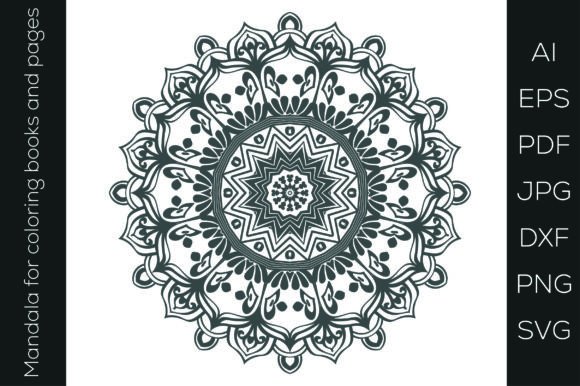
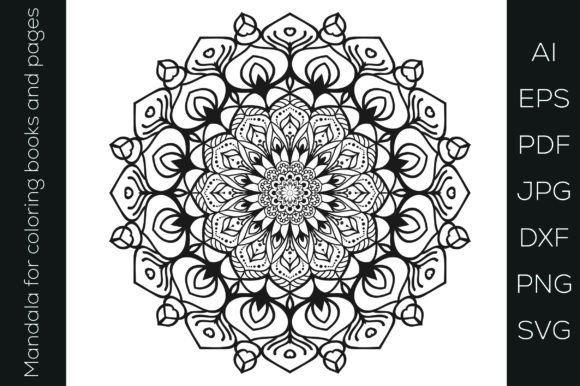
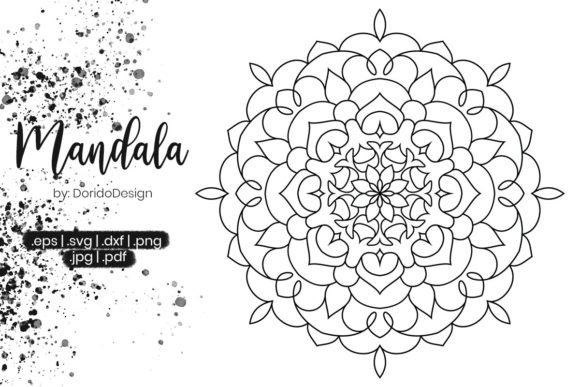
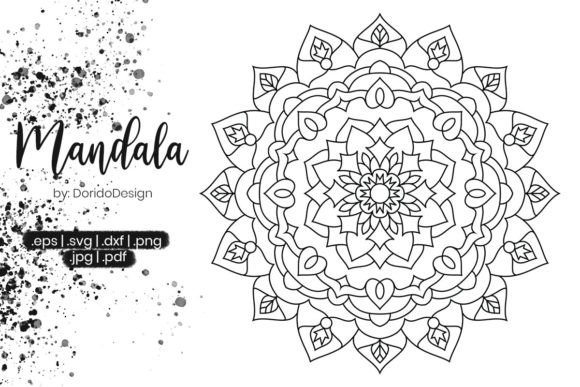
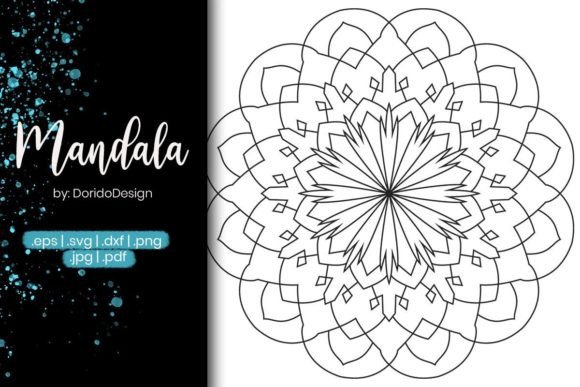
When I opened Mandala Coloring Page Vol.44, my eye didn’t jump to complexity—it settled into rhythm. This isn’t a high-density, symmetrical mandala built for laser precision; it’s softer, with gentle line weight variation and intentional breathing room between motifs. There’s no forced symmetry that fights natural stitch flow, and the outer ring has subtle breaks—not gaps, but pauses—that make it feel human-made. As an embroidery designer who’s stitched hundreds of mandalas onto baby onesies, linen tea towels, and boutique tote bags, I immediately saw how this one would translate: not as a rigid emblem, but as a quiet focal point.
Real Project Test: Embroidering It on a Linen-Cotton Kitchen Towel
Last week, I used Mandala Coloring Page Vol.44 as the centerpiece for a set of embroidered kitchen towels destined for a local craft fair booth. I chose a medium-weight natural linen-cotton blend—textured enough to add warmth, stable enough to hold detail without puckering. With a standard 4” hoop and lightweight cutaway stabilizer, the design stitched cleanly. The line work held up beautifully in satin stitch for outer petals and soft fill stitch for inner zones. No thread nesting, no skipped stitches—even at the tighter curves near the center. What stood out most? How well it read at 3.5 inches wide. Not too small to disappear, not so large it overwhelmed the towel’s scale. Customers paused longer at this piece than any other in the display. One asked, “Is that hand-drawn first?”—a compliment every embroiderer recognizes.
Where It Shines—and Where It Needs Thoughtful Handling
Mandala Coloring Page Vol.44 works especially well for:
- Custom apparel on sweatshirts and relaxed-fit tees—its open layout avoids bulk and reads clearly even with light fabric movement;
- Baby embroidery on organic cotton burp cloths and swaddle blankets—soft edges and moderate detail keep stitching gentle and safe;
- Embroidered patches for denim jackets or backpacks—clean outlines mean crisp edge definition without excessive underlay;
- Holiday and wedding gifts, like monogrammed pillow covers or guestbook accents—its balanced geometry feels intentional, not generic;
- Small shop product lines, where consistency matters: it scales cleanly from 2.75” (for cap front) to 5.5” (for tote bag center) without losing character.
But here’s where attention is needed:
- Small hoop sizes under 3”: Inner motifs begin to blur—test before committing to a 2.25” cap front;
- Stretchy fabrics like jersey or ribbed knits: requires tear-away + topping combo, or consider simplifying inner rings in your editing software;
- Dark or heavily textured fabrics: fine linework may recede—boost contrast with matte black or navy thread, not glossy metallics;
- Curved surfaces (like structured caps or curved pillow seams): avoid placing tight center clusters directly over seams—they’ll distort;
- Frequent-wash items like baby bibs or tea towels: confirm stitch density stays under 12,000 stitches if using standard 40-weight rayon—overly dense fills can crack after repeated laundering.
What It Adds to Your Finished Product—Beyond Aesthetics
This isn’t just decoration. Mandala Coloring Page Vol.44 elevates perceived value because it reads as *designed*, not downloaded. Customers notice the spacing between elements—the way negative space functions as part of the composition. That translates directly to trust: when someone sees this on a personalized gift or boutique apron, they assume care went into selection and execution. For Etsy sellers, that nuance improves conversion. For craft fair vendors, it invites conversation—not just “How much?” but “Who drew this?”
It also supports brand consistency. Because it’s not overly thematic (no seasonal icons, no script lettering), it fits across collections—spring nursery decor, summer market totes, fall holiday tags—without feeling disjointed. And for digital product sellers, its clean vector-ready lines make it ideal for printable mockups, social media previews, or layered design assets in your Graphics toolkit.
Practical Designer Notes Before You Stitch
Before using Mandala Coloring Page Vol.44 in your next embroidery project—or listing it as part of a commercial embroidery file bundle—do these six things:
- Test on scrap fabric matching your final substrate: texture changes everything;
- Check thread color contrast on both light and dark backgrounds—what reads on white linen may vanish on charcoal terry;
- Review stitch density: if your machine struggles with tight fill areas, reduce density by 5–8% rather than shrinking the entire design;
- Confirm hoop size compatibility: this design flows best in 4”–5” hoops, but verify minimum clearance for your frame system;
- Inspect small details at actual stitch-out size: zoom in on your embroidery software to spot potential stitch collisions in inner loops;
- Verify licensing: since Mandala Coloring Page Vol.44 is listed under Coloring Pages Amp and Graphics, confirm whether commercial use—including finished handmade products and digital resale—is permitted before launching on Etsy or your small shop site.
Final Thought: A Design That Respects the Maker—and the Wearer
Mandala Coloring Page Vol.44 doesn’t shout. It centers. It gives space to breath, to stitch, to connect. In a market flooded with overworked, overscaled embroidery files, this one stands out by doing less—intentionally. Whether you’re stitching it onto a baby’s onesie for a friend, building a cohesive line of embroidered kitchen goods, or offering it as part of a curated digital embroidery bundle, it carries quiet authority. It says: This was chosen, not just added. And in handmade work, that distinction is everything.